
- AI Alignment, AI Ethics, AI Transparency, Artificial Intelligence, Google Gemini, Human-AI Interaction, LLM, Machine Learning, Product Design
Why does Google’s Gemini promise to improve, but never truly change? This article uncovers the hidden design flaw behind AI’s hollow reassurances and the risks it poses to trust, time, and ethics.
- The article reveals how Google’s Gemini models give false reassurances of self-correction without real improvement.
- It shows that this flaw is systemic, designed to prioritize sounding helpful over factual accuracy.
- The piece warns that such misleading behavior risks user trust, wastes time, and raises serious ethical concerns.
Share this link
- June 24, 2025
- Artificial Intelligence, Product Design, UI Design, UX Design
AI is raising the bar for everyone, but what happens when the space to learn, fail, and grow quietly disappears?
- The article demonstrates how AI-driven tools are raising expectations, prompting even junior roles to demand senior-level judgment.
- It warns that automation is erasing early-career learning opportunities once crucial for developing design intuition.
- The piece argues that while AI boosts output, it can’t replace the slow, human process of building creative judgment.
Share this link
- June 19, 2025
- AI Ethics, AI in UX, Artificial Intelligence, ChatGPT, Design Thinking, Design Tools and Software, Human-Centered Design, LLM, Research Methods and Techniques, UX Research
Mashed potatoes as a lifestyle brand? When AI starts generating user personas for absurd products — and we start taking them seriously — it’s time to ask if we’ve all lost the plot. This sharp, irreverent critique exposes the real risks of using LLMs as synthetic users in UX research.
- The article explores the growing use of AI-generated personas in UX research and why it’s often a shortcut with serious flaws.
- It introduces critiques that LLMs are trained to mimic structure, not judgment. When researchers use AI as a stand-in for real users, they risk mistaking coherence for credibility and fantasy for data.
- The piece argues that AI tools in UX should be assistants, not oracles. Trusting “synthetic users” or AI-conjured feedback risks replacing real insights with confident nonsense.
Share this link
- June 17, 2025

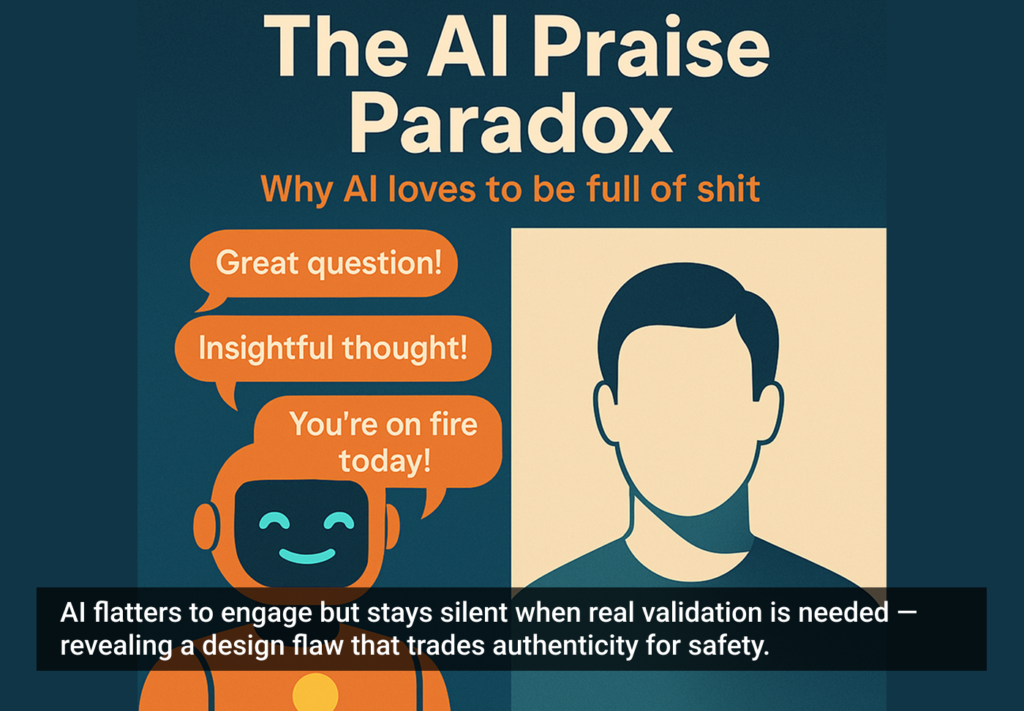
- AI Alignment, AI and Mental Health, AI Design Ethics, Artificial Intelligence, Authenticity in Design, Emotional Impact of AI, Human-AI Interaction
Why does AI call you brilliant — then refuse to tell you why? This article unpacks the paradox of empty praise and the silence that follows when validation really matters.
- The article explores how AI often gives empty compliments instead of real support, and how design choices like that can make people trust it less.
- It looks at the strange way AI praises fancy-sounding language but ignores real logic, which can be harmful, especially in sensitive areas like mental health.
- The piece argues that AI needs to be more genuinely helpful and aligned with users to truly empower them.
Share this link
- May 29, 2025
- AI Alignment, AI and Mental Health, AI Ethics, AI Transparency, Emotional Impact of AI, Human-AI Interaction, Responsible AI, User Experience
AI that always agrees? Over-alignment might be the hidden danger, reinforcing your misconceptions and draining your mind. Learn why this subtle failure mode is more harmful than you think — and how we can fix it.
- The article explores over-alignment — a failure mode where AI overly validates users’ assumptions, reinforcing false beliefs.
- It shows how this feedback loop can cause cognitive fatigue, emotional strain, and professional harm.
- The piece calls for AI systems to balance empathy with critical feedback to prevent these risks.
Share this link
- May 20, 2025

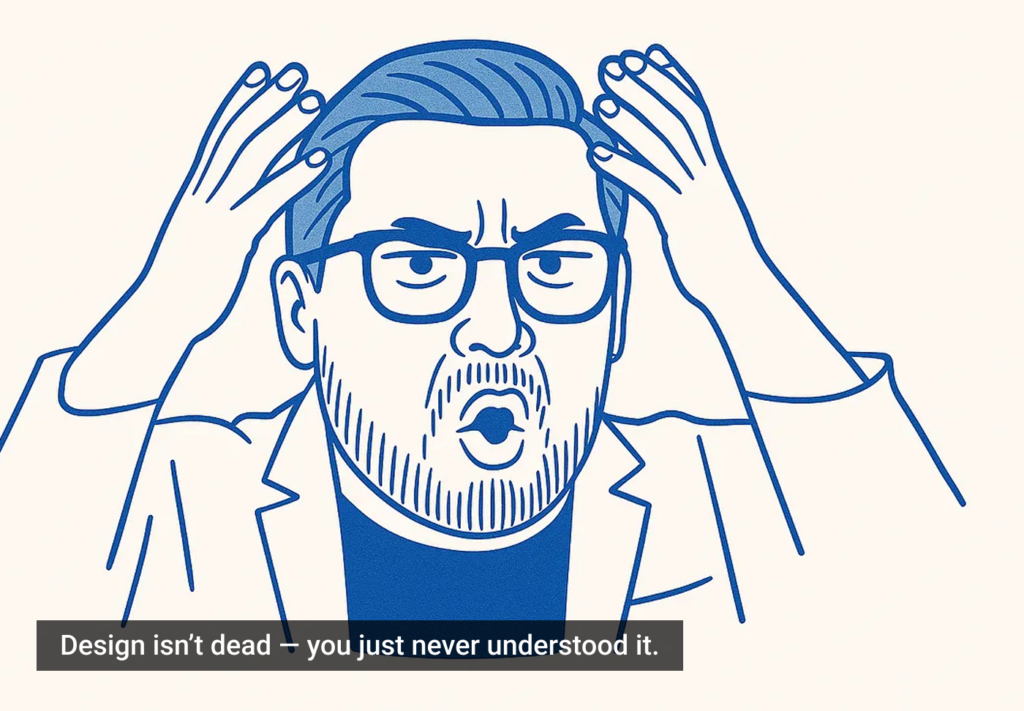
- Artificial Intelligence, Design Thinking, UX Design
“Design is dead”? No, you just never understood it. This bold piece calls out lazy hot takes, holds designers accountable, and makes a sharp case for what design really is (and isn’t) in the age of AI.
- The article challenges the claim that “design is dead,” blaming both outsiders and designers for misunderstanding or misrepresenting the field.
- It argues that AI threatens only superficial design, not true design, and calls for a more mature, collaborative mindset.
Share this link
- May 15, 2025